Cave country geology, basement-level consequences
Bowling Green is built on holes. The city literally has a cave running beneath it — Lost River Cave — and the karst limestone that dissolves into sinkholes, springs and caverns across Warren County does one more thing nobody advertises: it gives radon gas a thousand easy paths from the bedrock up into basements and crawl spaces. Kentucky consistently ranks among the highest-radon states in the nation, the EPA puts Warren County in Zone 1 — its highest-risk category — and state studies have found elevated radon in more than a third of tested Kentucky homes. This is not a maybe-problem here the way it is in most of the country. It is a test-your-house problem, a fix-it-properly problem, and — handled by certified professionals — a completely solvable one. Connecting Bowling Green homeowners and homebuyers with exactly that is all this site does.
Bowling Green Radon Mitigation connects homeowners and homebuyers across Bowling Green, Warren County and south-central Kentucky with state-certified local radon professionals — the certification is required by Kentucky law, and we treat it as the floor, not a feature. Professional radon measurement for peace of mind and real-estate deadlines, mitigation systems engineered for Kentucky basements and crawl spaces and guaranteed below the EPA action level, repairs and fan replacements for aging systems, and the plain-English guidance that turns a scary-sounding gas into a line item with a fix.
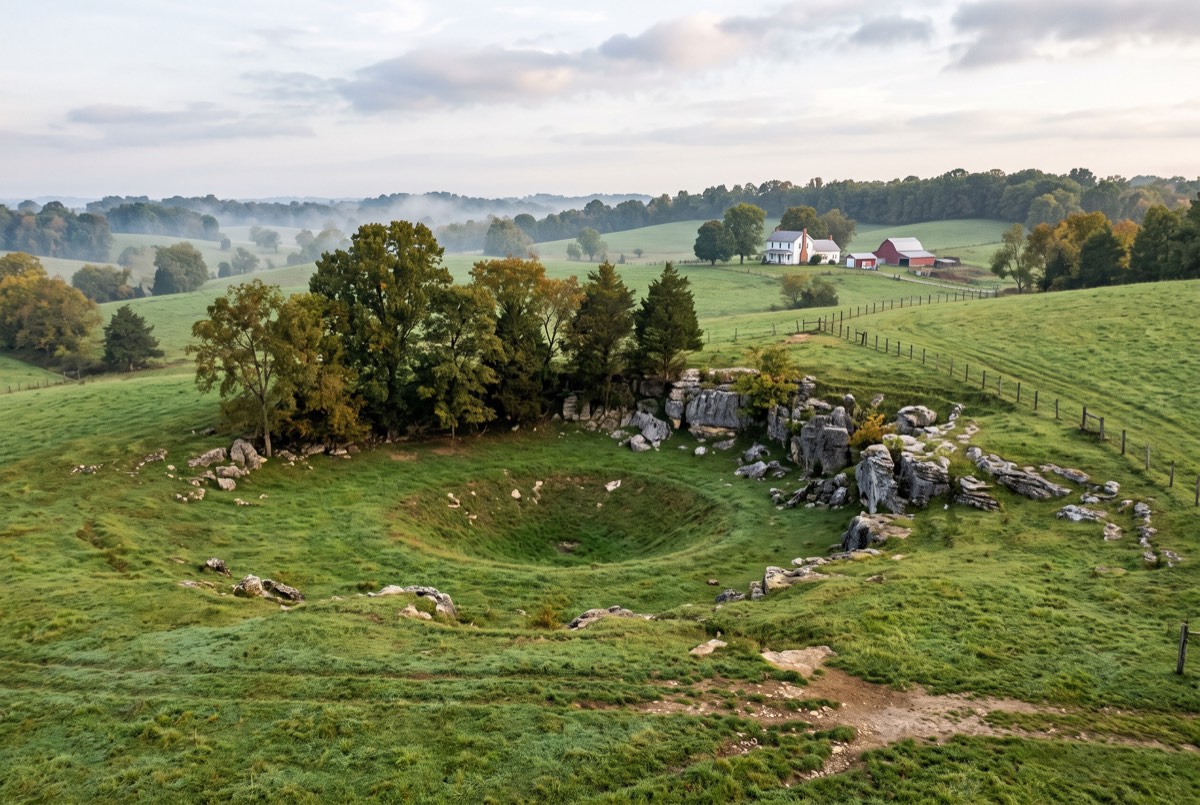
The why, in one picture: Warren County's karst limestone gives radon a thousand paths to the surface.
What we handle
Radon Mitigation Systems
Mitigation is where a scary number becomes a solved problem. An active radon system puts continuous gentle suction on…
Radon Testing
In a Zone 1 county, testing is not paranoia - it is the entry fee for knowing your own house. Kentucky's radon…
Real Estate Radon Testing
Around Bowling Green, radon tests ride along with home inspections as a matter of course - buyers' agents here know…
Basement & Crawl Space Radon
Kentucky lives closer to its soil than most of the country - full basements, walk-outs, cellars and crawl spaces put…
Radon System Repair & Fan Replacement
A high-radon county accumulates radon systems - and radon systems accumulate age. The fan at the heart of every…
New Construction Radon
Bowling Green is growing fast, and every foundation poured in Zone 1 karst without radon plumbing is a retrofit…
Why is radon so bad around Bowling Green?
Blame the rock. Karst limestone — the same formation that carved Mammoth Cave forty minutes north and Lost River Cave right in town — is porous, fractured and full of pathways. Radon forms naturally as uranium breaks down in that bedrock, and karst gives it highways to the surface: cracks, caves, sinkholes, springs and the soil under your slab. The EPA rates Warren County Zone 1, its highest radon-potential category, and Kentucky's average indoor level runs several times the national average. The only way to know your own house: a proper test. One in — roughly — every two or three Kentucky homes tests high; yours is either one of them or it isn't, and the test costs less than a tank of gas to find out.
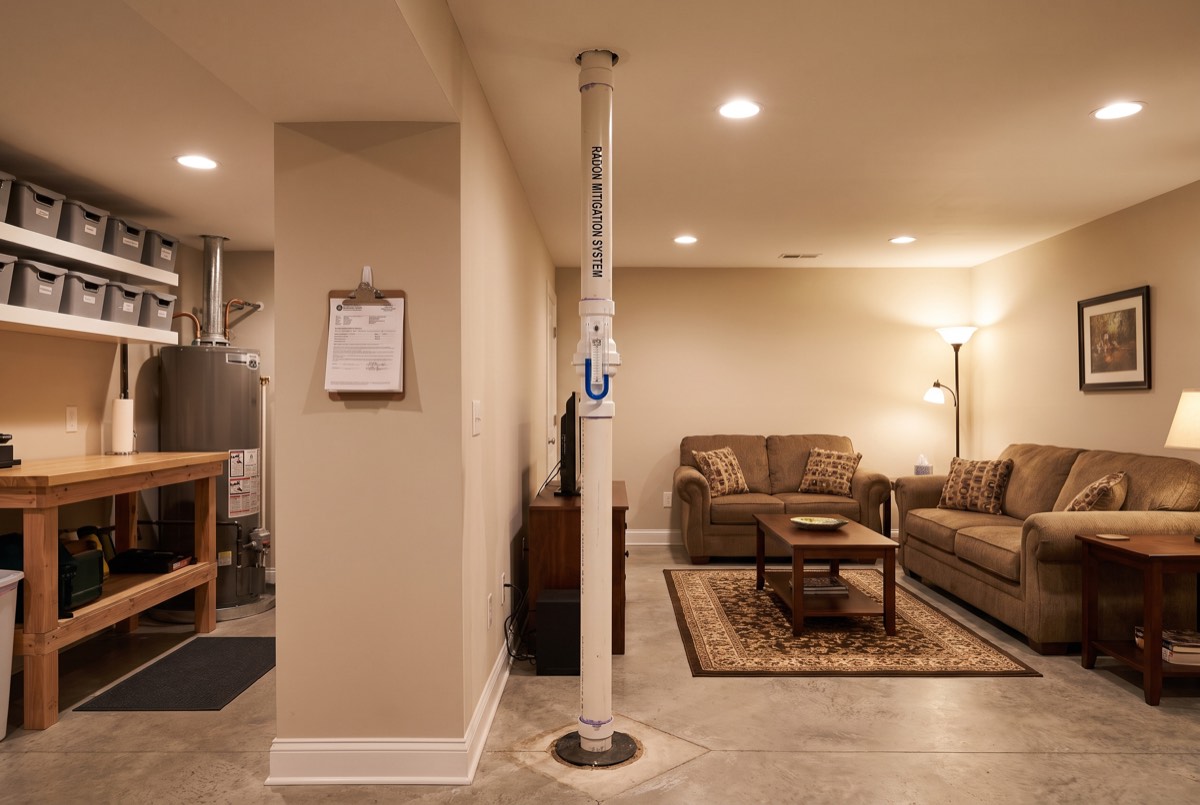
The fix: a labeled system, a gauge you can read, and a basement you can trust.
Where we go
Serving Warren County and the south-central Kentucky towns around it — the geology does not stop at the county line, and neither does the coverage.
Bowling Green, KY
Warren County's seat, Kentucky's third-largest city, and the capital of cave country - a town…
Franklin, KY
Simpson County seat on the Tennessee line - same karst belt, growing fast along…
Glasgow, KY
Barren County seat - and 'Barren' is a karst word; the county is sinkhole country through and…
Scottsville, KY
Allen County seat, southeast toward the state line - rolling karst farmland and small-town housing…
Russellville, KY
Logan County seat to the west - historic square, older housing core, and the same Zone 1…
Morgantown, KY
Butler County seat on the Green River - small, rural, and sitting on the same limestone as everyone…
Smiths Grove, KY
Northeast Warren County on the Mammoth Cave road - antique-town charm sitting directly on…
Alvaton, KY
South Warren County's acreage-and-new-build corridor - custom homes, big lots, fresh foundations on…
Common questions
Is radon really that bad in Bowling Green?
Yes — this is one of the honest high-risk regions. The EPA puts Warren County in Zone 1, its highest radon-potential category; Kentucky's indoor average runs several times the U.S. average; and state studies have found elevated levels in more than a third of tested homes. The karst limestone under the county — the same rock that made Mammoth Cave and Lost River Cave — gives soil gas easy paths into basements. None of which says your house is high: it says your house is worth testing.
My neighbor's house tested fine. Doesn't that mean mine will too?
Unfortunately not — and karst is why. The fractured limestone moves soil gas unpredictably, so two similar houses a street apart routinely test wildly differently. Radon here is decided by the cracks under your specific foundation, not by the neighborhood. The only number that means anything is the one measured inside your own house.
What radon level is dangerous, and what do the numbers mean?
Radon is measured in picocuries per liter (pCi/L). The U.S. indoor average is about 1.3; the EPA action level is 4.0, above which mitigation is recommended; between 2.0 and 4.0 the EPA suggests considering it. Warren County tests come back above 4.0 constantly — and occasionally far above. The EPA attributes about 21,000 U.S. lung cancer deaths a year to radon, which is why the fix exists and why it's worth taking seriously without panicking: elevated homes are fixed here every week.
Who is allowed to do radon work in Kentucky?
Kentucky law requires anyone performing radon measurement or mitigation professionally to be certified and registered with the Kentucky Board of Radon Safety. That is a real consumer protection in a high-radon state — and every professional this site connects you with carries that state certification. If you're ever quoted by someone who can't show it, walk away.